By Marisa Tolsma, Certified GAPS Coach | Bumblebee Apothecary
Quick Answer
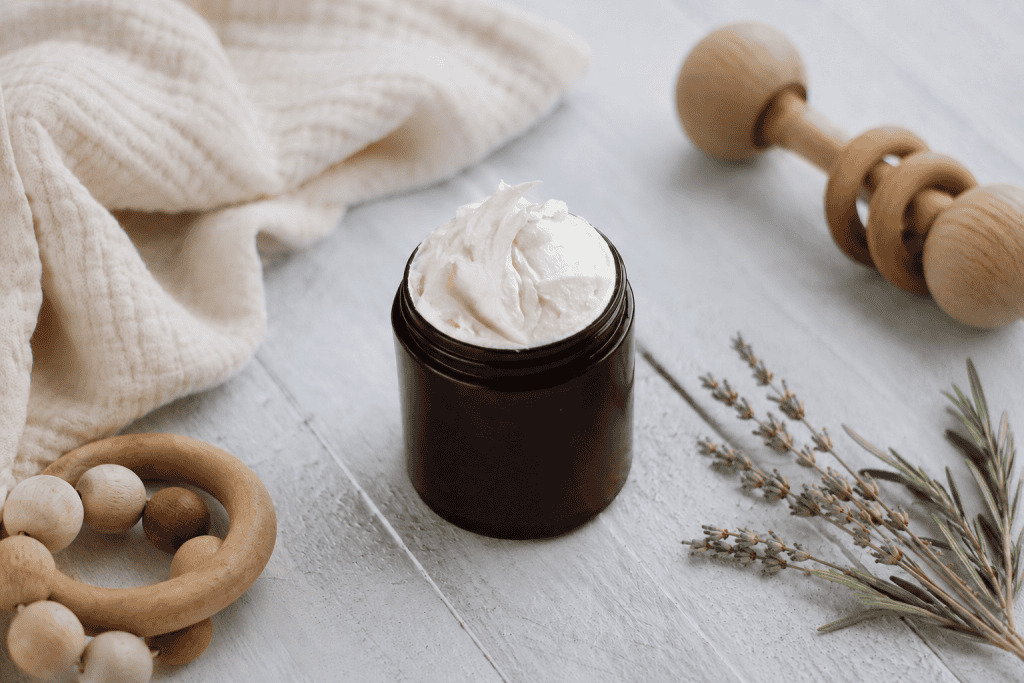
Tallow balm can be a gentle, nourishing option for soothing baby eczema. Grass fed beef tallow is rich in skin-supporting vitamins A, D, E, and K, and its fatty acid profile is remarkably similar to the natural oils in a baby’s skin, which helps it absorb and calm dry, irritated patches. In my experience as a mom of 5, plain, unscented, grass fed tallow balm is one of the gentlest things you can put on a baby’s skin. That said, baby eczema can sometimes signal a food sensitivity or another underlying issue, so always check with your pediatrician.
Pin it for later
This post contains affiliate links, which means I make a small commission at no extra cost to you. Get my full disclosure here.
Tallow Balm for Baby Eczema
If your baby has eczema, you know how heartbreaking it is. The dry, red, itchy patches. The scratching. The fussiness. The endless search for something, anything, that will bring relief without harsh chemicals or steroids you’d rather not use on your little one’s delicate skin.
I’m a mom of 5, and I’ve always been extra careful about what I put on my babies’ skin. Over the years, the single gentlest, most nourishing thing I’ve found is grass fed tallow balm. It’s pure, it’s simple, it’s traditional, and it works beautifully for soothing the kind of dry, irritated skin that comes with baby eczema.
Let me walk you through why tallow balm works so well for baby eczema, how to use it safely, and the one thing I always tell parents to keep in mind.
Why Tallow Balm Works So Well for Baby Eczema
Tallow is rendered beef fat, traditionally made from suet (the fat from around the kidneys of cattle). It has been used as a skin moisturizer for thousands of years. What makes it especially wonderful for baby skin is how closely it matches our own.
Grass fed beef tallow has a fatty acid profile that is remarkably similar to the natural oils in human skin. A baby’s skin recognizes it and uses it the way it would use the oils it produces itself. That’s why tallow absorbs so deeply and soothes so gently, without sitting greasy on top of the skin or causing the reactions that synthetic ingredients sometimes do.
For eczema specifically, grass fed tallow offers a few things that matter:
- Deep moisture. Eczema is characterized by a damaged, dry skin barrier. Tallow is intensely moisturizing and helps prevent the skin’s loss of moisture.
- Skin-repairing vitamins. Tallow contains fat soluble vitamins A, D, E, and K, all of which support skin healing and regeneration.
- Anti-inflammatory properties. The conjugated linoleic acid (CLA) in grass fed tallow has natural anti-inflammatory properties, which helps calm the redness and irritation of eczema.
- A naturally protective barrier. Palmitic acid in tallow helps improve the protective barrier function of skin, which is exactly what eczema-prone skin is missing.
- Purity. Plain tallow balm is just two ingredients: grass fed tallow and a little olive oil. No fragrance, no preservatives, no synthetic anything.
“The Primally Pure Baby Balm is the ONLY thing that works on my boys’ eczema-prone skin.” — lifestyle blogger (on tallow-based baby balm generally). You can make the same kind of nourishing tallow balm at home for a fraction of the cost.
How to Use Tallow Balm for Baby Eczema
Here’s the simple routine I use and recommend to other parents:
1. Start with clean, slightly damp skin
After a lukewarm bath (hot water can worsen eczema), gently pat your baby’s skin until it’s just barely damp. Applying tallow balm to slightly damp skin helps lock in moisture.
2. Use a tiny amount
Tallow balm is concentrated, so a little goes a long way. Warm a small amount between your fingers and gently smooth it over the affected areas. You don’t need much. If the skin looks greasy, you’ve used too much.
3. Apply after every bath and as needed
For active eczema, apply after baths and again whenever the skin looks dry or irritated, often 2 to 3 times per day. Consistency matters more than quantity.
4. Use plain, unscented balm for babies
This is important. For babies, I almost always use plain, unscented tallow balm with no essential oils. A baby’s skin is delicate and reactive, and even gentle essential oils can be too much. Keep it simple and pure. (If you ever do want to add anything for a specific issue like diaper rash, only use baby-safe essential oils at a very low 0.25% dilution, and check with your pediatrician first.)
How to Make Tallow Balm for Baby Eczema at Home
The beauty of tallow balm is how simple it is. For a baby-safe, unscented balm, you only need two ingredients:
- 1 cup grass fed tallow
- ¼ cup olive oil
Directions:
- Melt the tallow over gentle heat until it’s liquid.
- Remove from heat and stir in the olive oil.
- For solid balm, pour into a glass jar and let it harden. For whipped balm (my favorite, light and fluffy), let it cool until partly set, then whip with a hand mixer until creamy.
- Store in a glass jar at room temperature.
For my full step-by-step tutorial with photos and the whipped version, see my complete tallow balm recipe here.
If you’d rather buy a ready-made, baby-safe tallow balm instead of making your own, you can find handmade tallow balm in the Bumblebee Apothecary Shop. It’s made from 100% grass fed leaf fat, wet rendered for purity.
Sourcing Matters: Use the Right Tallow
For baby skin, quality is everything. Look for:
- 100% grass fed, grass finished beef tallow. The nutrient density is dramatically higher than grain finished.
- Wet rendered, if possible. Wet rendered tallow is the cleanest, whitest, and most odorless, which is exactly what you want for a baby. Here’s how to render it yourself.
- Leaf fat tallow. Leaf fat (from around the kidneys) renders into the purest, most nutrient-dense tallow.
The One Thing I Always Tell Parents
And I want to talk about something foundational, because I care about your little one getting real relief, not just temporary soothing.
Tallow balm is wonderful for calming and moisturizing eczema-prone skin. But eczema in babies is very often a reflection of something happening on the inside, frequently a food sensitivity (in the baby or, if nursing, in mom’s diet), a gut imbalance, or another underlying issue. The skin is a reflection of the gut. That’s true for adults, and it’s true for babies.
In my own healing journey, topical care helped soothe my skin, but it was addressing my gut from the inside that actually cleared my chronic skin issues for good. With babies, the same principle often applies. Tallow balm can bring real comfort while you and your pediatrician work to identify and address whatever is triggering the eczema underneath.
So please: use tallow balm to soothe and nourish, and also talk with your pediatrician or a trusted practitioner about what might be driving the eczema in the first place. If you’re curious about the gut-skin connection, I wrote more about it here.
“Our 2-year-old was struggling with a skin rash on his face. His skin has cleared up and he is now devouring meat and veggies. He loves kefir and asks for meat stock once in a while.” — Ancestral Gut Rest community member (after addressing skin and gut together)
Other Gentle Ways to Support Baby Eczema
Alongside tallow balm and working with your pediatrician, these gentle approaches can help:
- Lukewarm baths, not hot. Hot water strips the skin and worsens eczema.
- Short baths. Limit soaking time, and moisturize immediately after.
- Gentle, fragrance-free everything. Detergents, soaps, and lotions with fragrance are common irritants.
- Soft, natural fabrics. Cotton over synthetics and wool, which can irritate.
- Looking at diet. If you’re nursing, your pediatrician may suggest looking at common triggers in your own diet. For older babies on solids, food sensitivities are worth exploring with professional guidance.
Frequently Asked Questions
Plain, unscented grass fed tallow balm is generally very gentle and well-tolerated on baby skin because its fatty acid profile is so similar to a baby’s natural skin oils. As with any new product, do a small patch test first, use plain balm without essential oils, and check with your pediatrician, especially if your baby has known allergies or severe eczema.
Tallow balm can soothe, moisturize, and calm eczema-prone skin, and many parents see real improvement. But it’s best thought of as gentle topical support, not a cure. Baby eczema is often driven by an underlying issue like a food sensitivity or gut imbalance, so lasting relief usually comes from identifying and addressing that root cause with your pediatrician’s help.
For active eczema, apply a thin layer after every bath and again whenever the skin looks dry or irritated, often 2 to 3 times per day. A tiny amount is enough, since tallow is concentrated.
For most babies, I recommend plain, unscented tallow balm with no essential oils. Baby skin is delicate and reactive. If you ever want to add an essential oil for a specific issue, use only baby-safe oils at a very low 0.25% dilution, and check with your pediatrician first.
Both can help, but in my experience tallow tends to work better for eczema because its fatty acid profile is closer to human skin and it’s less likely to clog pores than coconut oil. Tallow also contains the skin-repairing fat soluble vitamins A, D, E, and K that coconut oil lacks.
Use 100% grass fed, grass finished tallow, ideally wet rendered for purity and made from leaf fat. Quality matters a lot for baby skin: cheap or poorly rendered tallow won’t have the same nutrient density or purity.
Always loop in your pediatrician about baby eczema, especially if it’s widespread, weeping or crusting, seems infected, isn’t improving, or is making your baby miserable. Eczema can also be a sign of a food sensitivity or allergy that’s worth investigating with professional guidance.
Gentle Support, Inside and Out
Soothing your baby’s eczema with pure, nourishing tallow balm while you work with your pediatrician to address the root cause is the kind of gentle, both-and approach I believe in. Here are a few ways I can help:
🌿 Free: Gut Wellness Getting Started Guide, a simple, beginner-friendly walkthrough to start supporting your family’s gut health (because the skin reflects the gut).
🌿 Make your own: My full tallow balm tutorial walks you through the whole process step by step.
🌿 Shop ready-made: Handmade grass fed tallow balm from the Bumblebee Apothecary Shop, made from 100% grass fed leaf fat.
Related Posts You’ll Love
- How to Make Tallow Balm
- Tallow Balm for Dry Skin, Eczema, and Acne
- The Best Diaper Rash Cream Recipe with Grass Fed Tallow
- Homemade Eczema Cream
- Is Tallow Good for Acne?
- Tallow and Gut Health
- Beef Tallow Uses: Everything You Need to Know
Join our traditional wisdom community, and grab a free Gut Reset Jumpstart when you subscribe!
GAPS™ and Gut and Psychology Syndrome™ are the trademark and copyright of Dr. Natasha Campbell-McBride. The information in this blog post is my personal experience and opinion as a Certified GAPS Coach. It is for general information purposes only, may not apply to you as an individual, and is not a substitute for your own physician’s medical care or advice. Always seek advice from your physician or another qualified health provider with any questions you may have regarding nutrition, medical conditions, and advice. Never disregard medical advice or delay seeking medical care because of something you have read on this blog.
💛 Marisa